[tab_nav type=”five-up” float=”left”] [tab_nav_item title=”Purpose” active=”true”] [tab_nav_item title=”Mechanics” active=””] [tab_nav_item title=”Requirements” active=””] [tab_nav_item title=”Maintenance” active=””] [/tab_nav][tabs][tab active=”true”]
What Is a Water Pressure Reducing Valve?
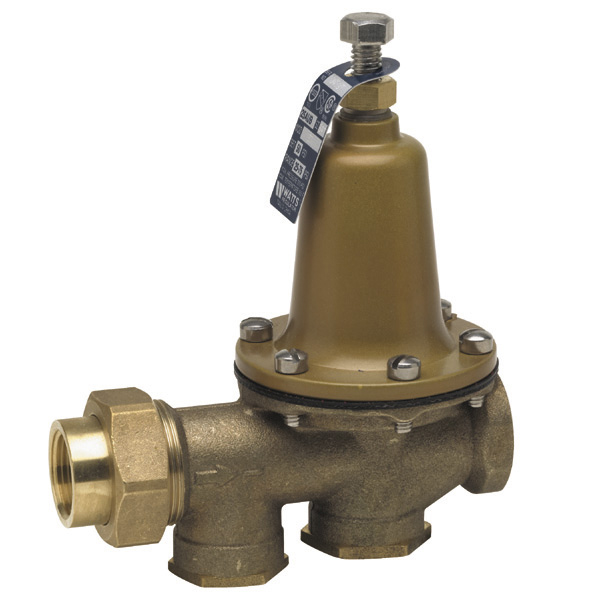
Also known as a water pressure regulator valve, these are inexpensive, compact mechanisms that provide us with two basic functions: First they reduce any high water pressure that is supplied to us from city water mains. A PRV can give us a lower, more functioning water pressure to distribute throughout our homes. Secondly, these valves not only reduce excessive pressure but also regulate it by maintaining a set pressure downstream of the valve. This insures that the dwelling’s fixtures, piping and appliances function at a safe, consistent pressure. Pressure reducing valves are typically located directly after your water meter and have an adjustment screw for setting desired pressure.
Two Basic Types Of Pressure Regulating Valves
Direct Acting Valves
This is the most commonly used PRV, especially in a residential application. They have a simple design and are an economical choice.
Pilot Operated Valves
This type of regulating valve is typically for larger diameter pipe, which makes them ideal for commercial and industrial work.
What Is Water Pressure?
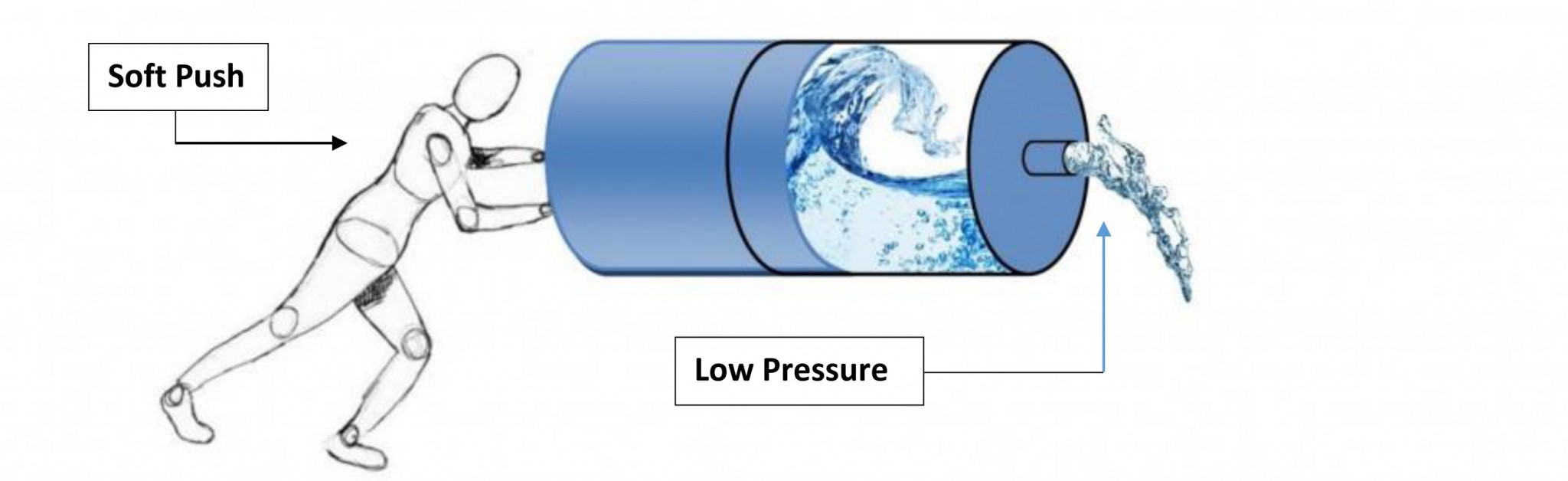
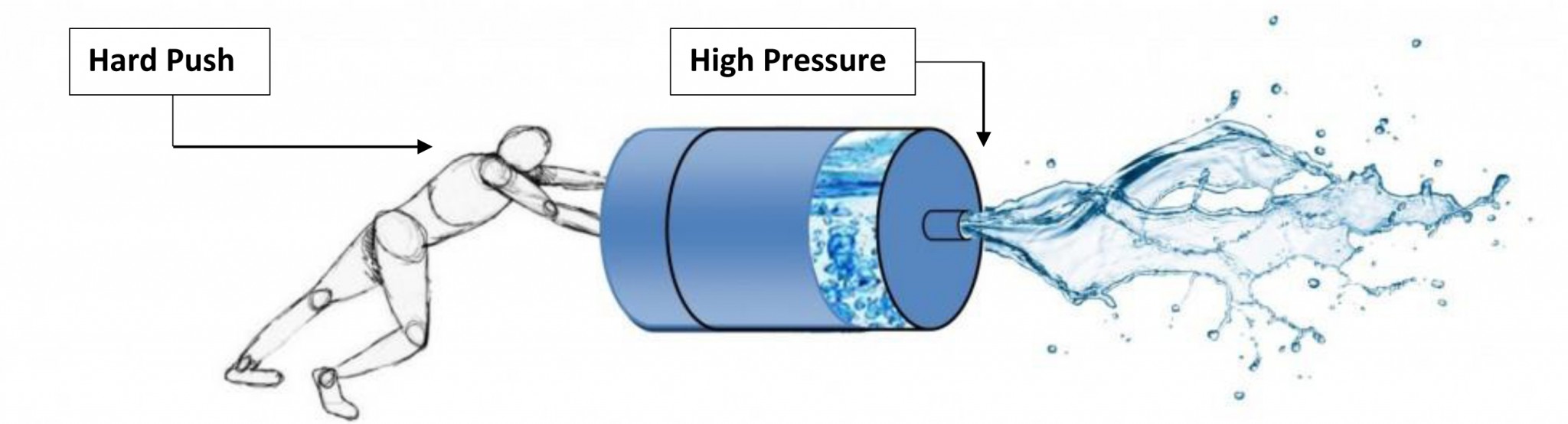
When opening a plumbing fixture in your home water is forced out by a “push”. This “push” can be measured in pounds per square inch (PSI). This reading is a measurement at which the water is forced through. Also, the higher the force the higher the velocity in which the water moves through the piping. So in short, the higher the pressure (PSI), the stronger the “push”.
What Is Wrong With High Water Pressure?
Let’s be honest, having “low water pressure” just doesn’t sound all that great. But the fact of the matter is, it’s very important to reduce excessive water pressure. And truly, a lower water pressure has little effect on the overall performance of your plumbing fixtures, so you need not worry. Your fixtures are designed to work optimally between 50 to 80 psi and anything above that can cause problems. High water pressure is much like high blood pressure within the human body. Excessive pressure can damage your organs overtime much like your fixtures. Here are a few problems with high water pressure:
Water Heater Leaks
High pressure causes your temperature & pressure safety devices to open and leak.
Banging Pipes
The velocity of your high water pressure can slam into your pipes causing them to rattle.
Dripping Faucets
Pressure can force out water through your faucets and damage internal parts.
Damaged Appliances
Excessive pressure can wreck havoc on the devices that turn your appliances off and on.
Leaking Pipes
Excessive pressure causes water piping to fail prematurely.
High Water Bills
Higher the pressure higher the flow, which results in higher monthly cost.
A Faucet With A 10 Minute Running Time:
@ 50PSI (Ideal Range)
@ 65PSI (Moderate Range)
@ 80PSI (Maximum Range)
@ 100PSI (High Pressure)
@ 150PSI (Very High Pressure)
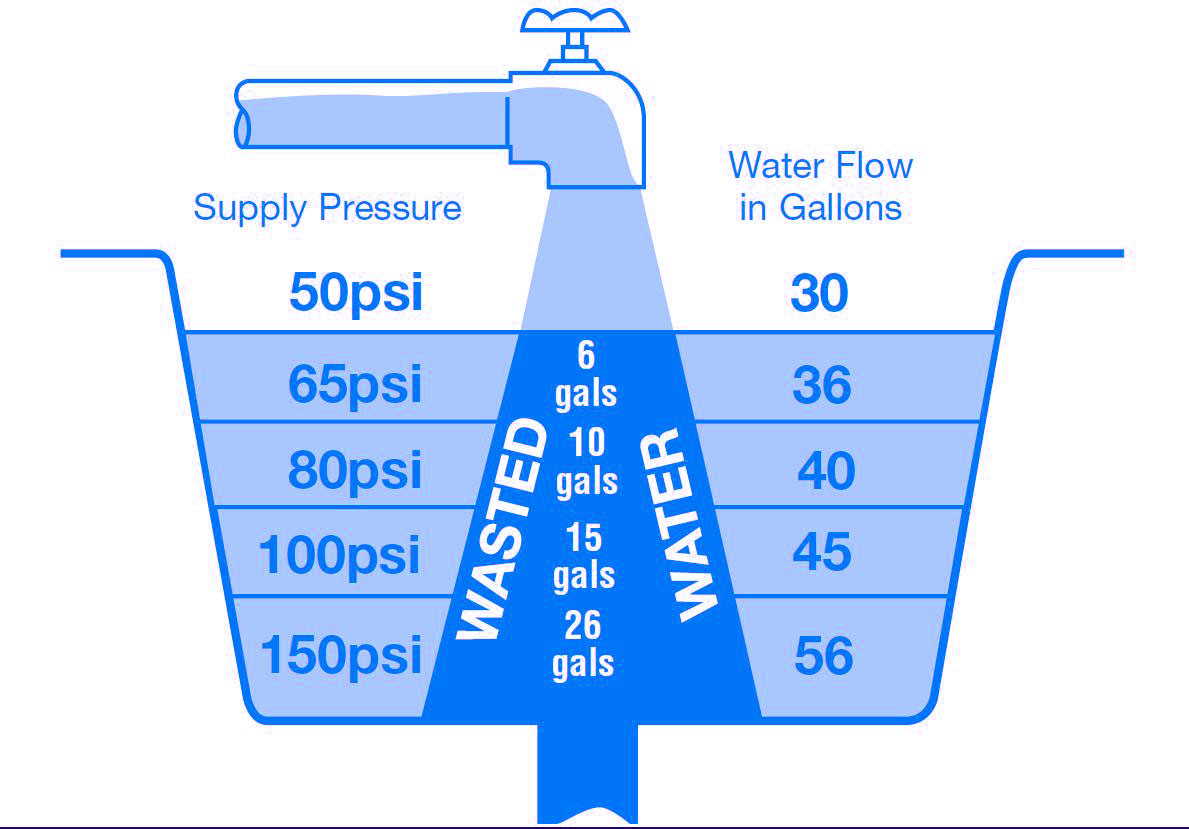 The diagram on the right shows how water pressure can effect water usage which in turn directly effects cost. This is a diagram of a faucet with a 10 minute running time. As you can see, more water is used preforming the same task. For instance, taking five minutes to brush your teeth with a normal water pressure vs a high pressure has a difference in cost. So, reducing high water pressure can really have long term savings.
Why Is City Domestic Water Pressure So High?
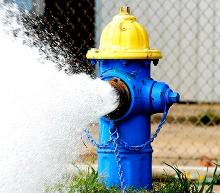
Higher water pressures are put into place for good reason. This excessive pressure is to accommodate for such things as high-rise buildings and elevation changes, to overcome pressure loss. Our cities also need sufficient water pressure to accommodate for fire protection, such as hydrants and fire sprinkler systems. This all starts first with pump stations that draw water from nearby treatment facility. These pumps will then distribute water throughout the city or fill elevated storage tanks (water towers) for distribution.
How Exactly Does A Water Tower Work?
A water tower is an elevated structure supporting a water tank constructed at a height sufficient to pressurize a water supply system. This system is then used for the distribution of potable water and emergency storage for fire protection demands.
Water towers are able to supply water even during power outages, because they rely on hydro-static pressure produced by the elevation to push water into domestic and industrial water distribution systems. However, the water tower cannot supply water for a long period of time without power, because an electrical pump is typically required to refill the tower. A water tower also serves as a reservoir to help with water needs during peak usage times. The water level in the tower typically falls during the peak usage hours of the day, and then a pump fills it back up during the night.
How Does A Water Tower Creates Pressure?
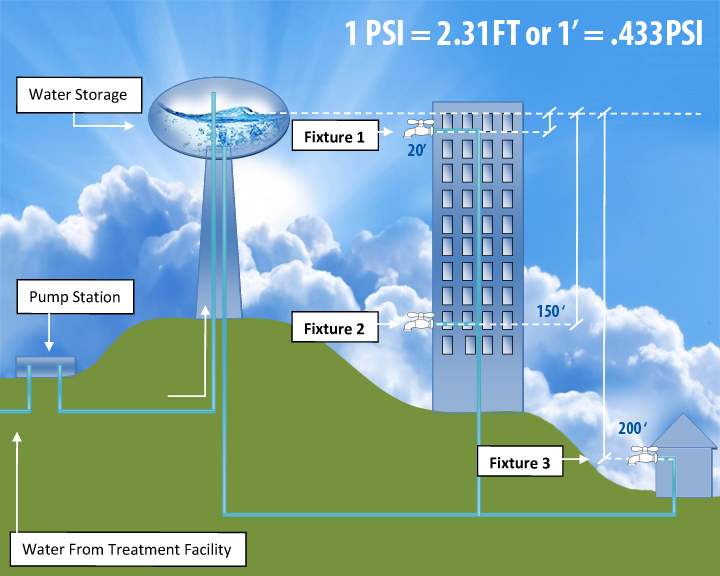
Below is a non-scale drawing of a potable water distribution system using elevated storage. This is a general concept of how water pressure can be created within a city. This example gives us an understanding of how pressures can differentiate based on a structure’s elevation in relation to a water tower. It also tells us why some structures are more susceptible to excessive pressure and are in need of a pressure regulating valve. If provided with height measurements, we can use simple math to determine the approximate pressure at each fixture.
 [clear]
Fixture 1
Noticing the elevation in relation to the water source in the tower we can determine our water pressure. 0n average with every 2.3 vertical feet downward from the water tower’s highest level we gain 1psi in water pressure. So, this would make this fixture’s pressure roughly 9psi and it would not require a pressure reducing valve.
Fixture 2
Moving on to the next fixture, we examine the elevation in relation to the water source again. Knowing that the top of the water source represents 0psi and we are 150′ away, we can use our formula again. This fixture’s pressure would be 65psi. This fixture is starting to gain excessive pressure but is not in the red zone.
Fixture 3
The last fixture’s elevation in relation to the water tower is roughly 200′. This fixture would require a pressure regulating valve because its pressure would be close to 87psi, which is over the recommended limit.
[/tab] [tab]
How Does A Water Pressure Regulating Valve Work?
When water enters the valve from your city main, it is constricted within the valve body and directed through the inner chamber controlled by an adjustable spring loaded diaphragm and disc. Even if the supply water pressure fluctuates, the pressure reducing valve insures a constant flow of water at a functional pressure as long as the supply pressure does not drop below the valve’s set pressure.
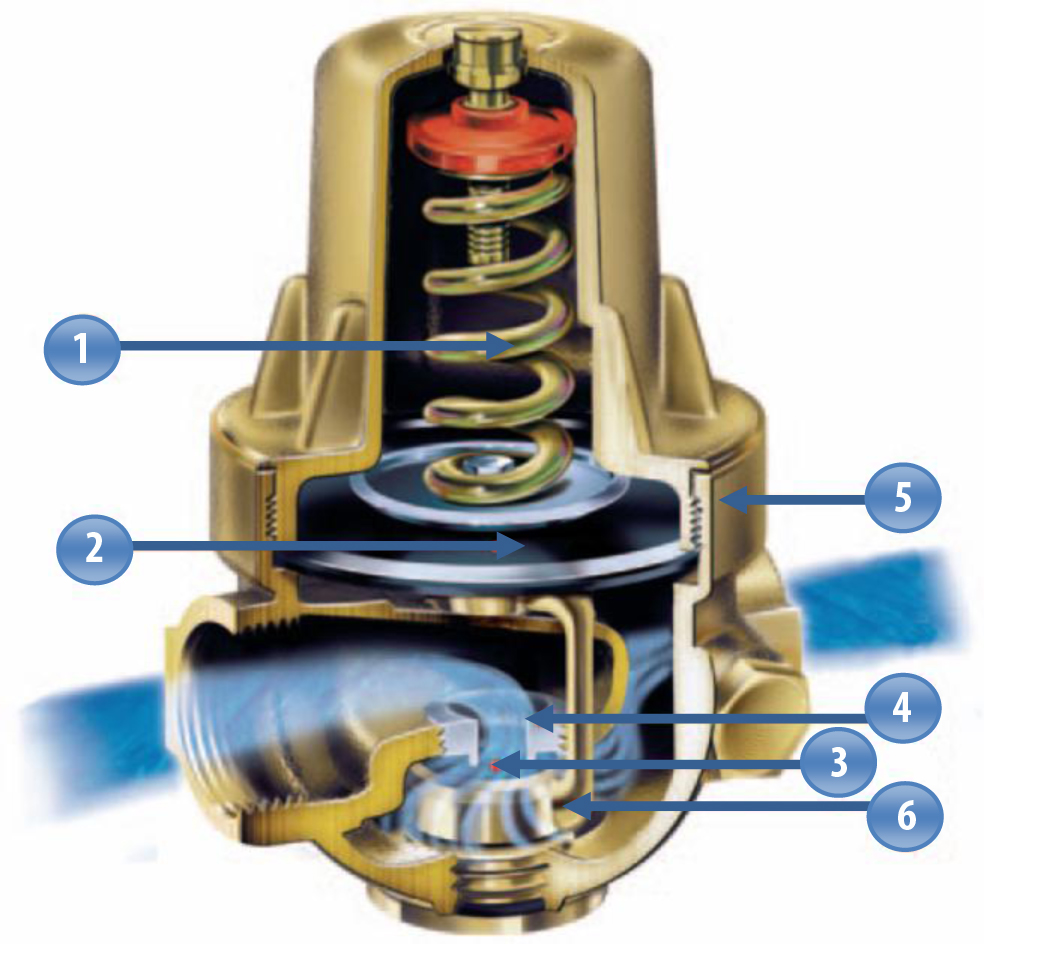
Tension Spring
This spring tension is preset by the manufacturer to give an optimal water pressure setting. It can be adjusted up or down to reach desired pressure by the adjustment screw on top of valve.Diaphragm
The diaphragm works in unison with the spring to set water pressure. It also tightly seals and separates the spring chamber from the water chamber.
Flap Valve
The flap valve is much like a door that separates the outlet pressure from the inlet pressure. This door opens and shut against the seat automatically to regulate desired pressure to your home.
Seat
The seat is a round smooth surface that holds tight and flush to the door. It acts much like the weather stripping around your home's front door. When the flap valve is closed, no winter wind can enter.
Valve Body
This one is self explanatory, the valve body is what contains the pressure reducing valve device. It physically separates the outside atmosphere from internal parts. These are typically made from a non-corrosive material such as brass or stainless steel.
Yoke
The yoke connects the flap valve directly to the diaphragm which moves the flap valve up and down. All these parts work together to supply the outlet side with a desired pressure.
How Do I Know If My Water Pressure Is High?
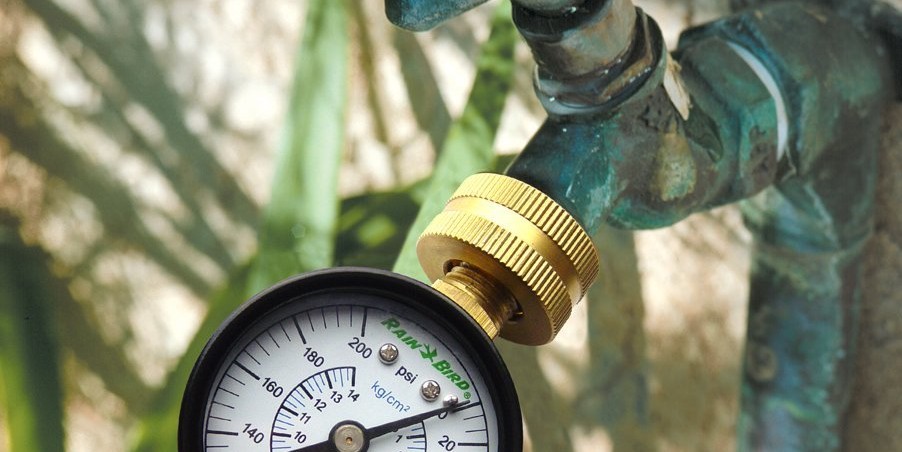
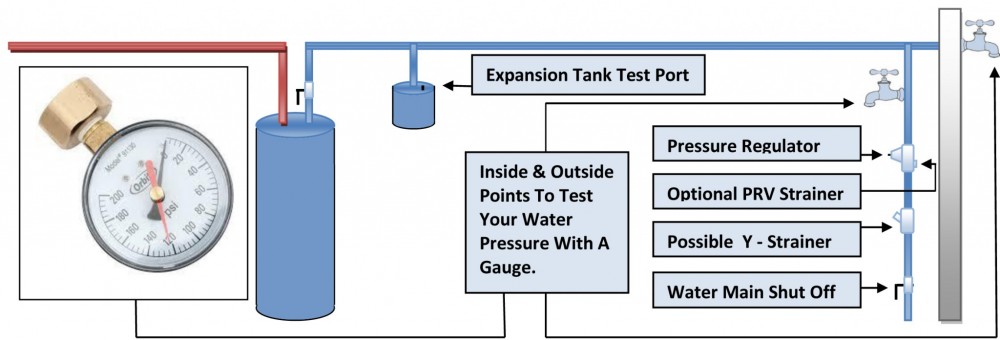
Determining if you have high water pressure is actually a very easy procedure. Simply by picking up a water pressure gauge you can get a precise reading by testing the static pressure of your system at an exterior water spigot. These gauges can be found at a local home center, plumbing supply house or hardware store. The gauge will screw directly onto your hose bib and once pressurized, it will give you a reading in psi (pounds per square inch). This reading should not exceed 80 psi and if it does you should schedule a plumber to come and investigate.
What Are Some Symptoms Of High Water Pressure?
Most plumbing fixture manufacturers recommend their products be used with a water pressure no higher than 80 psi. Anything higher than that can cause fixtures such as water heaters, faucets, shut-off valves and toilet parts to fail prematurely. Remember, long term excessive water pressure will cause problems and shouldn’t be ignored.
Banging Pipes
The velocity of your high water pressure can slam into your pipes causing them to rattle.
Leaky Water Heater
High pressure causes your temperature & pressure safety devices to open and leak.
Splashing Water In Your Sink
High water pressure can cause water to splash out of your sink.
Damaged Appliances
Excessive pressure can wreck havoc on the devices that turn your appliances off and on.
Drippy Faucets
Pressure can force out water through your faucets and damage internal parts.
High Water Bill
Higher the pressure higher the flow, which results in higher monthly cost.
What Type Of Maintenance Is Required For My Pressure Regulator Valve?
A good pressure regulating valve is virtually maintenance free. If installed correctly, it should last for many years to come . There are a few things that can be done to insure your PRV is doing its job:
Check Your Water Pressure
City water pressure can change due to maintenance or upgrades made throughout. This in turn could affect the PRV settings and it could need to be adjusted. By hooking up a water pressure gauge to your outside hydrant a few times a year you can get a quick reading on where you stand. If your pressure exceeds 80 psi you should definitely get a plumber scheduled to investigate.
Test Your Expansion Tank
Make sure your expansion tank is pressurized properly for thermal expansion. Expansion tanks are round globe looking devices that are usually installed inline from your water main to your water heater. These tanks handle thermal expansion and if not functioning correctly, it can affect the performance of your PRV.
Visual Inspection
This is a very basic maintenance procedure but an important one. Catching a small problem before it becomes a big one is key. A visual look over can reveal any corrosion or leaks. This can be a sign of a faulty valve.
Clean The Strainer
A good PRV can have what's called a strainer on the inlet side. A strainer is just that, it will catch any unwanted debris coming in from your city water main. Keeping this strainer cleaned out is never a bad idea.
[/tab] [/tabs]
I Already Have A PRV But My Water Pressure Is Still High!
Unfortunately, pressure reducing valves get tired and give up. This is very common in the plumbing service world, we see this a lot. The good news is, it has more than likely served its purpose by protecting your fixtures over the years. If you suspect high water pressure don’t put it off for too long, you’ll be sorry you did.
Schedule a Service Now