[tab_nav type=”three-up” float=”left”] [tab_nav_item title=”New Water Heaters” active=”true”] [tab_nav_item title=”Repairs” active=””] [tab_nav_item title=”Maintenance” active=””] [/tab_nav][tabs][tab active=”true”]
Water Heater Replacement
[dropcap]I[/dropcap]f your water heater is rusty, corroded, leaking, or just plain old, it may be time to replace it. At Inception, we’ll work with you side by side to help you determine what kind of water heater will suit your home the best. We believe strongly in giving our customers as much information as possible before they make a new investment to their home.
Standard Water Heaters
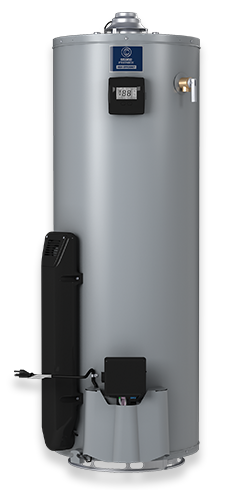 These are typically what people think of when they think of a water heater, and they are the most common. They last about 8-10 years for an electric heater, and 6-8 for a gas heater. Tank-type water heaters come in different varieties such as standard atmospheric, power vent and power direct vent. These different styles are usually decided based on space, need of efficiency and installation limitations. You will also have the option of using gas, oil or an electric utility source within your home. When deciding on the style of your heater, you’ll also need to determine the desired capacity. Standard water heaters can range from 30 up to a 75 gallon, and if more hot water is needed, two can be installed side by side in a balanced system to meet your needs.
Pros
If you’re looking for reliability and a proven means of heating, a standard 40 or 50 gallon heater is likely what you are looking for. These storage tank-type heaters can be installed as gas or electric depending on what currently exists in your home. They are reliable, and low cost both up front and down the road.
Cons
They are always on. Unlike tankless water heaters, energy is constantly being used to heat the water inside. The are also bulky. They frequently take up a lot of space in storage or utility rooms, which can be a problem if you don’t have much space to start with. They can also be inadequate, depending on the size of your household.
[/content_band]
Tankless Water Heaters
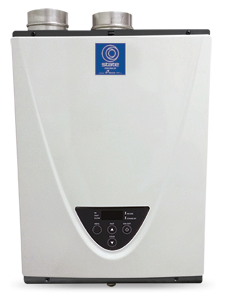
The tankless water heater is fairly new here in the states. This item always seems to get brought up by the customer’s curiosity. Either they’ve seen them on TV, or a friend has had one installed. These are quite the popular item. This type of heater heats water directly, without the use of a storage tank. When a hot water tap is turned on, cold water will travel through the piping within the unit. There, the water is either heated by a gas burner, or less commonly an electric element. This unit will provide the fixture with an endless supply of hot water. Tankless water heaters are very small in comparison to a traditional tank-type water heater, which makes them great for limited space. Also, only heating water on demand vs storing hot water can help cut back on utility expenses. Unfortunately, tankless heaters are limited to a certain flow rate, which does limit their ability to run numerous fixtures simultaneously. So depending on the homes demand of water, this could result in more than one heater being needed, but one heater is usually sufficient for a standard home.
Pros
These are an extremely popular item because they take up minimal space and only heat water on demand. If you don’t demand hot water at your fixture it doesn’t burn fuel. These are ideal for long term savings on your utility cost.
Cons
They do require a bit more maintenance than a standard water heater and are more expensive to purchase. Also, your home will need to be evaluated to make sure your area and utilities can accommodate for one.
Heat Pump Water Heaters
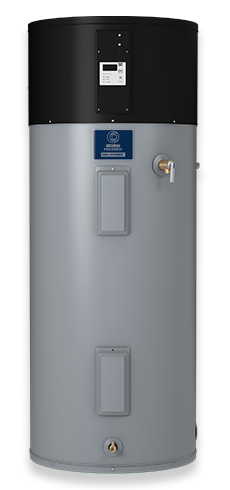 The heat pump water heater is designed to move heat from one place to another instead of generating it directly. Heat pump water heaters are a great choice if you’re installing an electric heater. These can be two to three times more efficient than a typical electric water heater. To understand the concept of a heat pump water heater, just imagine a refrigerator that’s working in reverse. While a refrigerator removes heat from an insulated box and expels that heat to the surrounding air, a heat pump water heater takes the heat from surrounding air and transfers it to the water that’s in the tank. This is extremely efficient because it is a lot easier to transfer energy instead of making it. They do heat water with electricity like a standard electric, but only during peak usage demands.
Pros
Heat pump water heaters have a very low operational cost and can be two to three times more energy efficient than a standard electric water heater.
Cons
They’re limited to only using electricity for operation, and have a higher initial cost than a standard heater. Also, heat pump water heaters do not operate efficiently in a cold space.
[/tab][tab]
Repairing A Water Heater
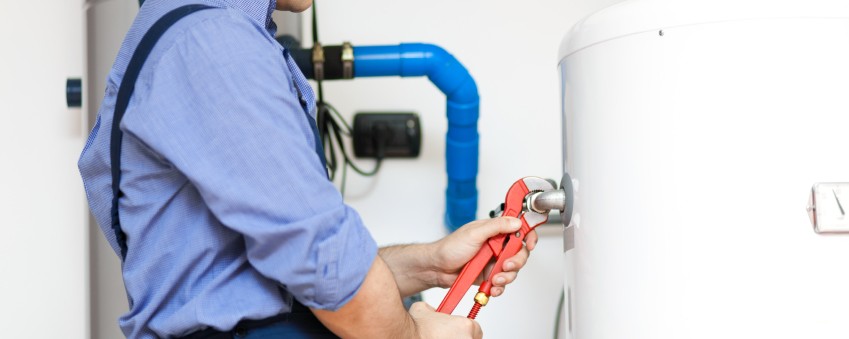
Sometimes replacing an old heater just isn’t an option financially, a quick repair is all you need to get up and running again. A new water heater can be an expensive investment and at Inception, we totally understand that. We are more than happy to help you assess the issue and give you a solution that best suits your needs. Our technicians can determine if your water heater is repairable or not, and make sure you’re investing in the right option.
Should You Repair Or Replace?
A good repair can help extended the life of your original investment. The downfall to repairing vs replacing is the gamble you take as a customer. Diagnosing the cause of the faulty water heater, plus the installation cost and parts can add up, but still not near the cost of a new heater. So what’s the risk? Well, based on the heater’s age, you could be paying a plumber to install a new burner assembly on a tank that’s on the verge of giving up. Once the holding tank goes, unfortunately all of the new parts go along with it. A good plumber though, can thoroughly inspect your heater and help you make the right decision on repairing vs replacing.
Repairable Water Heater Issues:
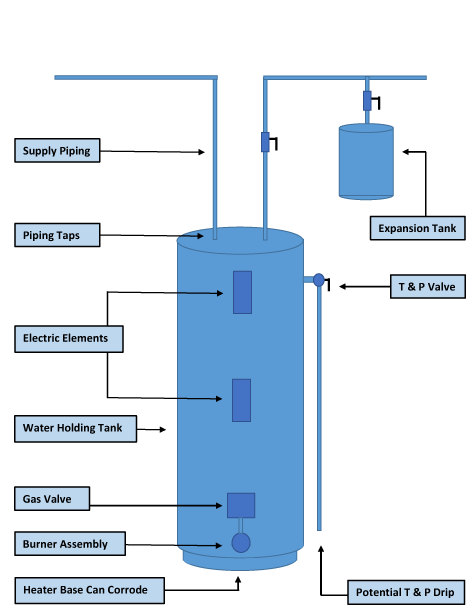
T&P Valve
This valve can become faulty for numerous reasons but is usually an easy fix. It’s also a low cost item, which is nice, so your heater can stay put.
Gas Control Valve
If you have a gas water heater that’s not heating properly this can be the culprit. Replacing this valve is a bit costly and more in-depth than a T&P, but can fix your problem.
Burner Assembly
Another gas water heater issue could be the burner assembly. This can also fix your problem but is quite costly as well.
Leaking Supply Lines
Supply line leaks are a very common issue that can be resolved with minimal cost. Old piping or a bad supply valve can result in a leak, and Inception can get it fixed in no time flat.
Electric Heating Element
This applies only to electric water heaters and is a fairly inexpensive part that commonly gets tired. By draining the tank we can remove it and get you up and running in no time at all.
Non-Repairable Water Heater Issues:
Leaking Tank
If the holding tank itself has started to leak, there is pretty much no hope on saving the water heater. At this point you’ll definitely need to replace it.
Structurally Rotting
Here is another issue that can’t be resolved with a repair. If the bottom of the heater can’t support the tank anymore, then it’s time to replace it.
Excessive Mineral Deposits
Flushing your tank of sediment should be a scheduled routine maintenance procedure, but unfortunately if this is neglected you could be in for a surprise. Excessive mineral deposits can destroy a perfectly good water heater.
Damaged Taps
Repairing your supply lines can be a simple procedure, but if the water heater taps are corroded or damaged, there is usually not much we can do for it.
[/tab][tab]
Routine Water Heater Maintenance
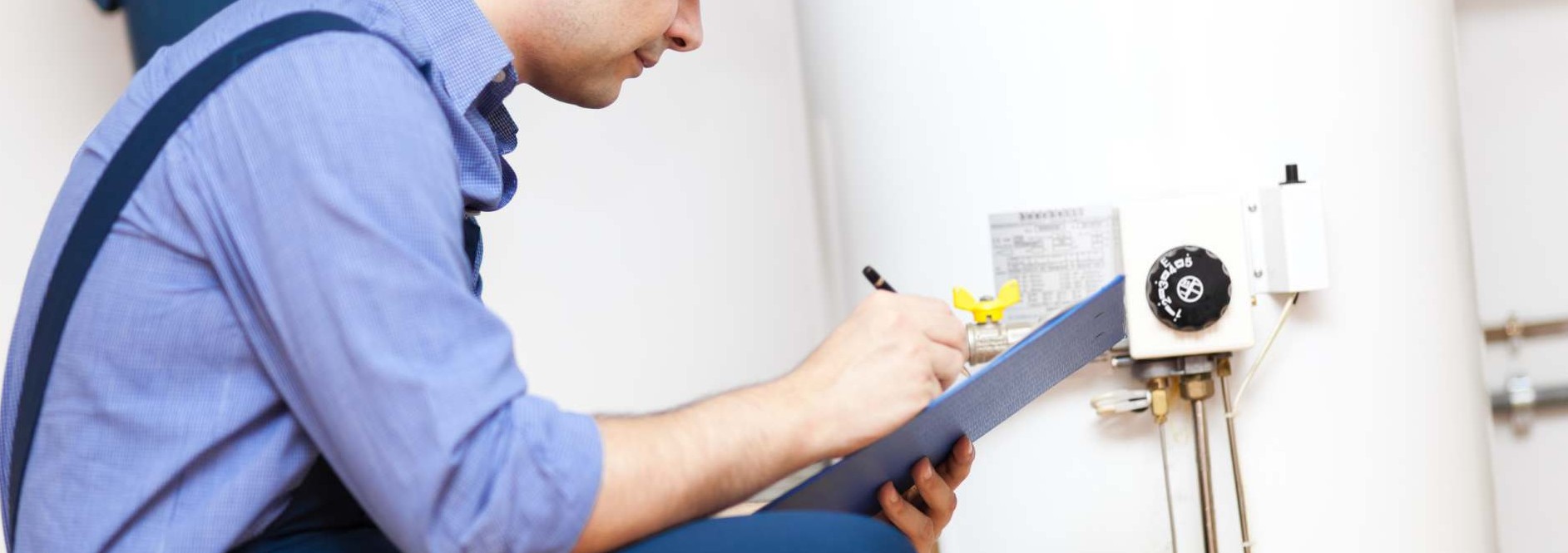
Most homeowners don’t realize that their water heaters requires routine maintenance. By taking the time to flush sediment out, or check the pressure of your thermal expansion tank, you can really help extend the life of a heater. Old heaters can have potential buildup of calcium and other sediments, which can cause them to not heat as efficiently as they once did. These maintenance procedures can be done annually by an Inception technician. Preventive maintenance makes sense. Give us a call! We’ll keep an eye on your investment.
Expansion Tank Pressure
Expansion tanks are designed to help eliminate thermal expansion. When a water heater tank is heated, the water inside will expand and create pressure throughout your system. This is perfectly acceptable when you are demanding hot water at your fixture, but when not using hot water this can become a problem. This trapped rise in pressure, over time, can damage your tank or cause your pressure relief valve to periodically open and leak. So keeping an eye on this device can be beneficial in the long run.
Temperature & Pressure Relief Valve
A quick inspection of your T&P valve is never a bad idea. A temperature & pressure relief valve is an extremely important device put in place to prevent the heater from swelling and potentially exploding. These can become tired and faulty which typically results in a small drip from the discharge piping near the floor. Inception Plumbing can take care of these small issues for you very quickly.
Sediment Flush
The United States has large amounts of hard water throughout. These minerals love to make themselves at home in your water heater. Just like your routine dental appointment to get that build up before it has a chance to start, your water heater is much the same. Inception can flush your water heater tank of these unwanted deposits before they take over.
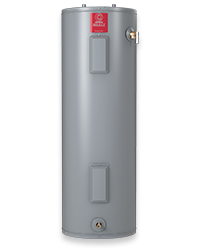
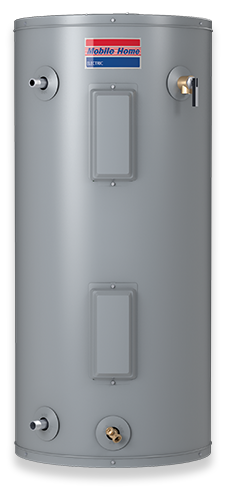
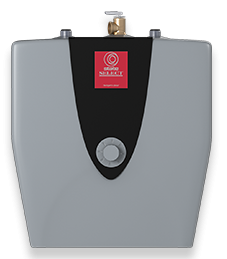

Inception Plumbing only State water heaters for our Service work. State Water Heaters have an exceptional manufacturer’s warranty and have established their credibility by providing a superior product that lasts. State provides great customer service as well, so you will have a product you can rely on. Here are few of many we can install today.
Standard Atmospheric – Power Vent – Power Direct Vent – Tank-less Heaters
[accordion id=”2″] [accordion_item title=”Standard Atmospheric Vent” parent_id=”2″ open=”true”]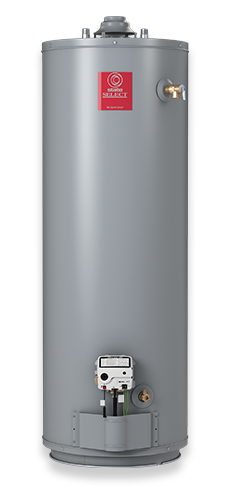
The Select® Series gas water heater is designed to deliver an economical performance that can lower your energy bills and also provide long-lasting value.
30 Gallon – 40 Gallon – 50 – Gallon
Manufacturer's Tank Warranty
Manufacturer's Parts Warranty
[/accordion_item] [accordion_item title=”Power Vent” parent_id=”2″]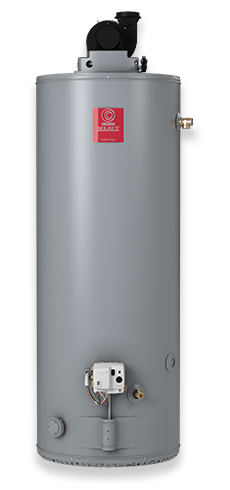
The Select® Power Vent gas water heater is engineered to maximize efficiency, while offering greater flexibility in installation options.
40 Gallon – 50 – Gallon – 75 Gallon
Manufacturer's Tank Warranty
Manufacturer's Parts Warranty
[/accordion_item] [accordion_item title=”Power Direct Vent” parent_id=”2″]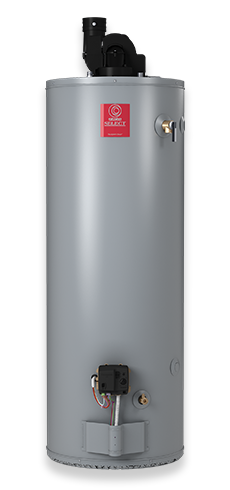
The Select® SL Power Direct Vent Series gas water heater is designed to handle both water heating and space heating in your home, while delivering optimized performance and exceptional reliability.
40 Gallon – 50 – Gallon – 75 Gallon
Manufacturer's Tank Warranty
Manufacturer's Parts Warranty
[/accordion_item] [accordion_item title=”Tankless” parent_id=”2″]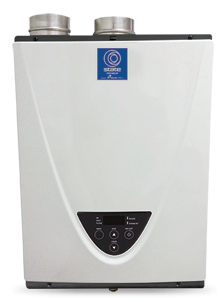
The State Tankless Water Heater is the wave of the future. These heaters are Ultra-Low NOx which makes them ideal for efficiency and our environment.
160,000BTU – 180,000BTU – 199,000BTU
Manufacturer's Heat Exchanger Warranty
Manufacturer's Parts Warranty
[/accordion_item] [/accordion]Inception Plumbing Knows Water Heaters!
When it comes to repairing or replacing your water heater, the technicians at Inception know what we’re doing. We’re happy to work with you to determine exactly what you are looking for in terms of repair or replacement. We’ll help you figure out what kind of heater will work best in your home. If your looking for a good quality trust worthy contractor look no further! Regardless of which option you choose, Inception can help! Don’t forget, we will dispose of your old heater free of charge.